A hepa vacuum is an air-cleaning machine that uses a special filter to trap at least 99.97% of dust and particles as small as 0.3 microns. You’ll find that this tool is essential for people who suffer from allergies or asthma. If your home has a lot of pet dander or fine dust, this type of vacuum helps keep your indoor air quality much cleaner than a standard unit.
What makes a HEPA vacuum different
The filter must trap 99.97% of particles that are 0.3 microns in size to meet the official rating. This specific measurement targets the most difficult size for a filter to capture, ensuring that smaller and larger particles are trapped with even greater efficiency.
Check the box for the word “true” or “certified” to ensure the filter meets the legal standard. Generic labels like “HEPA-style” or “HEPA-type” often lack independent testing and may allow significant dust to bypass the filtration media entirely.
Replace your filter based on your specific usage patterns, as the frequency depends on how often you vacuum your floors. Consult your owner’s manual for the manufacturer’s recommended service intervals. Clogged filters force the motor to work harder, which can eventually damage the internal cooling fan.
If you have pets, you might need to change the filter more often to maintain strong suction. Dander and fine hair clog the pleats rapidly, causing a noticeable drop in cleaning power.
Always buy filters from the original maker to ensure a tight seal around the edges. Third-party alternatives often use slightly different dimensions that leave gaps, allowing unfiltered air to escape directly back into your room. If your vacuum loses suction immediately after a filter change, the seal is likely compromised.
Why this technology matters for air quality
The main reason to use this equipment is its ability to stop tiny particles from blowing back into your room while you clean. Standard vacuum cleaners often have leaks in the casing or poor filter seals. These gaps allow fine dust, pollen, and mold spores to escape back into the air after the machine collects them. A true version of this tool uses a sealed system to force all incoming air through the dense filter media.
Perform a simple test to verify your machine’s integrity. Turn the unit on and check for dust or air leaks around the seams of the filter housing or casing while the machine is running. If you see dust clouds near the motor vents while vacuuming, the internal housing has failed. A breach here renders the most expensive filter useless because air follows the path of least resistance, bypassing the filtration media entirely.
When a vacuum captures these small particles, it prevents them from settling back onto your furniture or being breathed in by your family. If the machine isn’t properly sealed, even a great filter can’t do its job.
You should know that this isn’t a cure for all air issues. If your home has high humidity, mold can grow inside the vacuum bag or filter housing if you don’t dry it out. If you notice a musty smell, it’s a sign that you need to clean the internal parts or replace the filter immediately.
Apply this rule to manage your environment: if you’re primarily fighting allergens like pollen or dander, rely on high-efficiency filtration. If you’re struggling with chemical off-gassing from new carpets or paints, this technology won’t help. You must then add an activated carbon air purifier to your room. Choosing the wrong tool for the specific pollutant costs you time and leaves your air quality unchanged.
When the filtration standard changes
The simple answer assumes you’re using a machine that’s fully sealed. If your vacuum has a filter that says “HEPA-type” or “HEPA-style,” it doesn’t meet the 99.97% efficiency requirement. These labels often describe the filter material itself, but they ignore the air that escapes through poorly fitted housing.
If you’re dealing with fine allergens like dander or pollen, check the seal around the filter door. If you can see light through the seam when the machine is open, dust is bypassing your filtration entirely. In this case, no filter rating will protect your indoor air quality.
For high pet hair loads, the standard three-month replacement rule is insufficient. Hair creates a dense mat that chokes airflow, causing the motor to overheat and lose suction. If your machine feels hot to the touch after ten minutes of use, swap the filter immediately regardless of its age.
When upgrading, look for the “True HEPA” designation. This ensures the entire unit, not just the filter media, has been tested for leakage.
If you’re unsure of your machine’s status, perform the flashlight test. Shine a bright beam into the exhaust port in a dark room while the vacuum runs. If you see dust dancing in the light, your seal is compromised.
How to use your vacuum properly
Check the manual to find the specific filter replacement schedule for your model. Most HEPA filters require a full swap every six to twelve months, even if they appear clean.
Empty the dust bin or replace the bag once it reaches the “fill” line to keep airflow high. If you wait until the container is packed, the motor must work twice as hard to pull air through the debris, which rapidly overheats the internal components.
Wipe the inside of the bin with a damp cloth every time you empty it to remove static-charged dust buildup. This prevents fine particles from clogging the sensors that regulate suction power.
Inspect the rubber gaskets around the filter door for any cracks or missing pieces that allow air leaks. If you notice a whistling sound while vacuuming, a damaged gasket or a blockage is likely the culprit, which can significantly reduce your machine’s suction capacity.
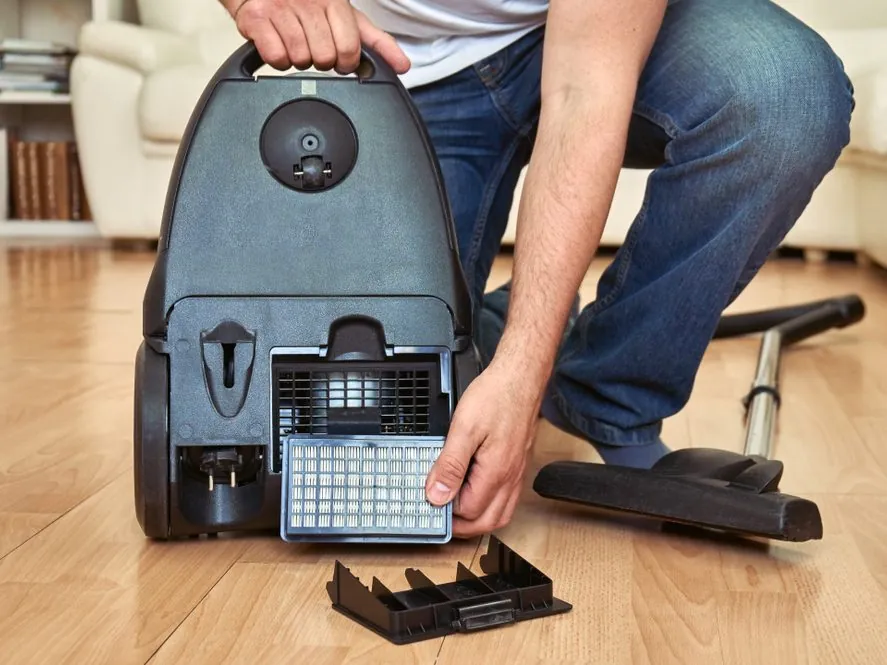
Install the new filter firmly, ensuring it clicks into place or forms a tight seal against the frame. A gap as small as a millimeter allows dust to bypass the filtration system and settle directly into the motor housing.
Run the vacuum slowly over carpets to give the filter time to trap the fine particles in the fibers. If you have high-pile rugs, move at a pace of one foot per second. Moving faster prevents the brush roll from agitating deep-seated grit.
Common mistakes that ruin performance
Washing a filter marked as “non-washable” destroys the electrostatic charge embedded in the synthetic fibers. Once this charge is gone, the filter loses its ability to trap microscopic dander and pollen, regardless of how clean it looks.
Ignoring the “check filter” light forces the motor to fight against massive internal resistance. This creates heat that can melt plastic housing components or blow a thermal fuse. If the light stays on after a quick shake, replace the filter immediately to restore airflow and prevent motor strain.
Generic replacement filters rarely match the exact dimensions of your vacuum’s intake port. A gap of even one millimeter allows fine dust to bypass the filtration system and coat the internal electronics. If you see a gray haze forming on the exterior exhaust vents, your seal has failed.
Vacuuming wet spills with a dry-use model ruins the paper pleats instantly. Moisture causes the material to swell and warp, which prevents airflow. If you accidentally suck up liquid, the filter must be discarded and replaced, as moisture ruins the filtration media and promotes mold growth. If the smell persists, the mold has already taken root.
Frequently asked questions
Can I wash my hepa filter to save money?
You can only wash the filter if the manufacturer explicitly labels it as “washable” in your user manual. Washing a non-washable filter ruins the dense material and renders it useless for trapping particles. Always check your specific model’s manual before applying water to a filter.
How long does a hepa filter last?
A filter typically lasts between 6 and 12 months, though this depends on your vacuuming frequency and floor debris levels. Heavy pet shedding can cause the filter to clog much faster. You should replace it if you notice reduced suction or unpleasant exhaust odors.
Is it safe to use a vacuum without a filter?
It isn’t safe to use your vacuum without a filter because it will blow dust and allergens directly into your room. Running the machine without one allows fine grit to enter the motor and cause premature failure. Always ensure the filter is securely locked in place before operating.
Does it matter if my vacuum isn’t sealed?
An unsealed vacuum allows dirty air to leak out of the machine without passing through the filter. Even with a high-quality filter, air will take the path of least resistance through any gaps in the housing. Check the filter door edges to ensure there are no gaps when closed.
Why is my vacuum losing suction?
A vacuum loses suction most often because the filter is clogged with fine dust or the bin is too full. When the filter becomes blocked, the motor can’t pull enough air through the system to pick up dirt. If suction remains low after cleaning, the filter has reached the end of its life.
How do I know if my filter is real?
You can know the filter is real by checking the packaging for the “true” or “certified” label that confirms it meets the 99.97% efficiency standard. Avoid products that use vague terms like “HEPA-style” or “HEPA-type,” as these are marketing words that don’t guarantee any specific level of performance. Genuine filters from the vacuum manufacturer are the only ones you can trust to fit your machine’s specific seal perfectly.
Conclusion
Investing in this technology is a smart choice for your family’s long-term health. Once you switch to this cleaner, you’ll likely notice a real difference in how fresh your home feels. Check your local home improvement store today to see which model fits your space best; you won’t regret the upgrade.