A central vacuum system is a stationary cleaning unit installed in a utility area, such as a garage or basement, that uses a network of hidden pipes to pull dust through wall inlets. It removes dirt from your living spaces and deposits it into a large collection canister located far away from the rooms you’re cleaning. Unlike portable vacuums that recirculate air, these systems vent exhaust outside, which keeps fine particles from returning to your indoor air.
How a central vacuum system cleans
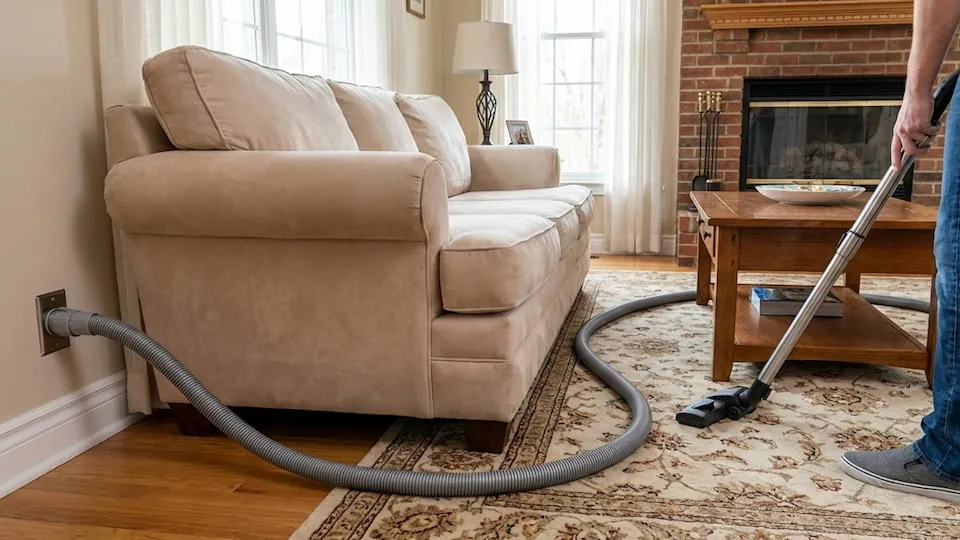
A central vacuum creates a vacuum seal through PVC pipes hidden inside your walls or under your floors. When you plug a lightweight hose into a wall inlet, the system triggers, pulling debris through the piping to a remote power unit. This design removes the need to drag a heavy motor or power cord across your living space.
The power unit remains in a fixed location, typically a garage, basement, or utility closet. Because the motor is isolated, you only carry a hose and tool, making it significantly easier to navigate stairs. Most models collect debris in a large canister that requires emptying only two to four times per year.
Exhaust air is vented outdoors, which prevents fine dust and allergens from recirculating into your home. This is a critical advantage for allergy sufferers, as portable vacuums often leak microscopic particles back into the air through their exhaust filters.
Low-voltage wiring runs behind the walls to signal the motor the moment you insert the hose. If your system fails to start, check the small contact pins inside the wall inlet for debris or corrosion. If the pins are clear but the motor remains silent, the issue is likely a tripped breaker or a disconnected low-voltage wire at the power unit terminal.
If you have a multi-story home, install at least one inlet per floor to ensure the hose reaches every corner without stretching. Stretching a hose beyond its intended length causes a drop in suction pressure, leaving dirt behind in high-traffic areas.
Why they improve indoor air quality
The primary advantage of this technology is its ability to remove dust and allergens from the living area entirely. Traditional portable vacuums often leak fine dust particles back into the room through their exhaust filters, even if they have high-quality seals. Because a central vacuum system exhausts directly outdoors, it provides a more effective way to manage indoor air quality for households sensitive to dust or pet dander.
By moving the collection process to an external or remote location, you ensure that the air being exhausted doesn’t contribute to the particulate matter circulating in your bedrooms or living areas. This physical separation is a permanent feature that portable units simply can’t match.
You can verify the seal quality of your current vacuum by shining a bright flashlight beam across the exhaust vent in a dark room; if you see dust dancing in the light, your machine is actively recirculating allergens.
If you have a home with mostly hard floors, a system with a simple floor brush is usually sufficient. If your home has thick carpets, you must choose a power head with a motorized brush roll to lift deep debris. A major trade-off is the initial cost and the complexity of the installation process. Professionals often install these systems during new construction, but retrofitting existing homes is possible if you have accessible crawl spaces or attic access.
A mistake people often make is choosing a power unit that’s too small for their total square footage. This forces the motor to work harder and reduces the airflow at the furthest inlets.
As a rule of thumb, add 500 square feet to your home’s actual size when selecting a motor to account for friction loss in the piping. This error leads to premature motor failure and weak suction that makes cleaning frustrating. If the system loses suction at the inlet furthest from the power unit, check your pipe joints for air leaks before assuming the motor is failing.
Situations where requirements change
| Situation | What changes | What to do instead |
|---|---|---|
| Large homes | Pipe length | Use a high-capacity power unit |
| Thick carpets | Brush type | Install a motorized power head |
| Existing homes | Wall access | Use surface-mounted or attic piping |
| Pet owners | Filter type | Choose a cyclonic separation unit |
| Small apartments | Space availability | Use a compact wall-mounted unit |
When your home exceeds 3,000 square feet, standard suction often fails to reach the furthest inlet. You must calculate the total pipe run; if it exceeds 100 feet, a high-capacity motor is mandatory to maintain consistent airflow. Failing to account for this distance leads to premature motor burnout as the system struggles against excessive static pressure.
Thick carpets require more than just standard suction. If your pile depth exceeds one inch, a simple air-driven brush will stall under the resistance. You need a motorized power head that draws electricity directly from the wall to maintain constant rotation. Without this, you’re merely pushing surface dust around rather than extracting deep debris.
For pet owners, the primary mistake is relying on cloth filters. These clog within minutes of picking up dander, forcing the motor to work harder and overheat. Always opt for a cyclonic separation unit. This design uses centrifugal force to spin heavy hair into a collection bin before it touches the filter. If you can see fine dust escaping your exhaust vent, your current filtration system is already failing.
How to use your system properly
Check the collection canister every three months to see if it’s full. If you have pets, you may need to empty it more often. Most households find that pet hair reduces capacity by half, requiring a monthly check to prevent airflow restriction.
Insert the hose into the wall inlet firmly until you hear the motor click on. If it doesn’t start, rotate the hose cuff slightly while pushing inward. A loose connection is the most common cause of a system failure to engage.
Move slowly across carpeted areas to give the suction time to pull embedded dirt from the fibers. If you move too quickly, you leave behind fine dust that eventually compacts into the carpet backing.
Keep the hose free of large objects like coins or hair ties that could cause a clog in the pipes. If you hear a rattling sound while vacuuming, stop immediately and reverse the hose to clear the obstruction before it lodges in a wall bend.
Use the correct attachment for your floor type to avoid scratching wood or damaging carpet pile. Use felt-bottomed heads for hardwoods and beater bars only for high-traffic carpet.
Listen for changes in the motor sound, which can indicate a blockage in the pipes or a full filter. A high-pitched whine usually signals a blockage, while a muffled, heavy sound suggests the filter is saturated.
Clean the filter screen once a year or as the manufacturer suggests to maintain maximum suction power. Neglecting this step forces the motor to work harder, which can shorten its lifespan by several years.
Common mistakes to avoid
Ignoring a loss of suction often leads to a full clog that’s difficult to remove without professional tools. If you notice the motor pitch rising or the airflow sound changing, stop immediately. Clear the brush roll and check the primary intake port before the debris compacts into a solid mass.
Trying to vacuum up liquids will damage the motor and ruin the internal electrical components. Even a small amount of moisture creates a conductive path that shorts the circuit board. If you accidentally ingest fluid, stop using the system immediately and contact a professional technician to inspect the piping and motor for moisture damage.
Failing to check the hose for small punctures results in a significant loss of cleaning power. Hold the hose up to a light source to spot pinhole leaks that bleed pressure. A simple wrap of duct tape can restore suction, but if the tear exceeds two inches, replace the hose to prevent motor overheating.
Overfilling the collection bucket puts unnecessary strain on the motor. Empty the bin once it reaches the fill line, not when it’s packed tight. Running a full unit forces the motor to work harder against restricted airflow, which typically cuts the expected service life by half.
Frequently asked questions
Does a central vacuum system add value to a home?
Yes, it’s often viewed as a premium home feature that can increase resale appeal. Buyers see the built-in piping as a permanent convenience that simplifies home maintenance. While the exact dollar value varies based on your local real estate market, it’s a feature that distinguishes a property from others that rely on portable units.
How long does a central vacuum motor last?
Most high-quality units are designed to last for a long duration with regular maintenance. The actual lifespan depends on how often you clean and whether you keep the filter system clean. You can check the expected life for your specific model in the owner’s manual provided by the manufacturer.
Is it safe to vacuum construction dust?
No, you should never use a central vacuum to clean up fine construction debris like drywall dust or sawdust. This material is often too fine for the filters and can quickly clog the pipes or damage the motor bearings. Use a shop vacuum with a HEPA filter for heavy-duty cleanup tasks instead.
Can I install a central vacuum by myself?
Yes, you can install one if you’re comfortable working with PVC pipe and low-voltage wiring. If you have an unfinished basement or accessible attic space, the process is much simpler than in a finished home. If you aren’t confident in your ability to route pipes through wall studs, you should hire a professional installer.
How often should I replace the hose?
You should replace the hose only when you notice visible cracks or a significant drop in suction that persists after clearing potential clogs. A high-quality hose can last for a long time if you handle it with care and avoid stepping on it. Check the hose surface based on your usage and consult the owner’s manual for guidance.
What happens if I get a clog in the pipes?
If a clog occurs, you’ll notice a sudden and total loss of suction at all inlets. You can often clear minor clogs by reversing the airflow or using a long, flexible plumbing snake through the nearest inlet. If you can’t reach the blockage, contact a professional service technician to avoid damaging the wall pipes.
Conclusion
Investing in this permanent setup can significantly improve your home’s air quality and simplify your weekly chores. If you’re considering an installation, it’s a great idea to contact a local professional who can evaluate your floor plan. They’ll help you decide if it’s the right fit for your family’s needs.