
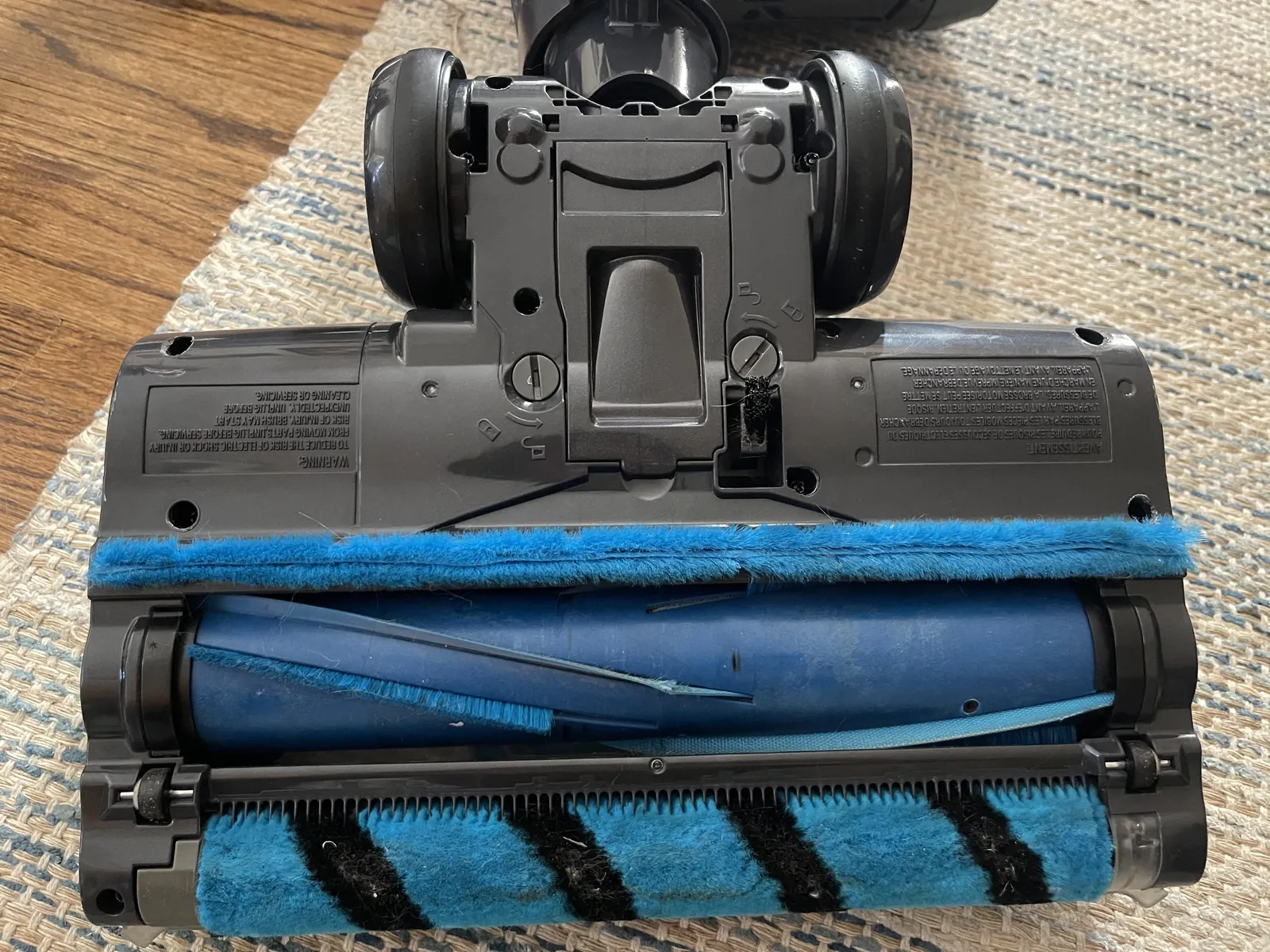
A blocked brush roll is the most common reason you’ll find a shark vacuum brush not spinning, usually caused by hair or debris wrapping around the rotating part. If the brush roll is clear of obstructions, the issue often stems from a tripped thermal reset switch or a loose belt. You can verify this by checking the underside of the vacuum head for visible tangles or by feeling if the brush moves freely when the power is off.
Why your Shark vacuum brush stopped spinning
| Cause | How common | How to confirm it | Fix it yourself? |
|---|---|---|---|
| Tangled debris | Very common | Look at brush roll | Yes |
| Thermal cutoff | Common | Check vacuum temperature | Yes |
| Clogged airflow | Common | Check hose suction | Yes |
| Loose belt | Occasional | Brush feels loose | Yes |
| Broken motor | Rare | No motor sound | No |
| Faulty sensor | Rare | LED light flashing | No |
Hair and carpet fibers create a friction lock that stops the roll instantly. If you see visible wrapping, use a seam ripper to slice through the buildup rather than pulling, which can snap the drive belt.
Thermal cutoffs trigger when the motor overheats from a lack of airflow. If the unit is hot to the touch, let it cool for thirty minutes before restarting. If it stops again immediately, check the filters for fine dust buildup.
A loose belt often presents as a high-pitched squeal or a brush that spins freely when touched by hand. If the belt is intact but stretched, replace it; a worn belt will slip under the weight of carpet resistance.
Distinguish between a motor failure and a sensor fault by listening for the hum. If the motor runs but the brush stays still, the issue is mechanical. If the vacuum is dead silent, the sensor has likely cut power to prevent damage.
Removing hair and debris tangles
Debris build-up prevents the brush roll from turning because the friction becomes too high for the motor to overcome. When hair wraps tightly around the bristles, it creates a physical barrier that stops the rotation entirely. This happens more often in households with pets or long human hair, as these fibers wind into dense knots that the vacuum can’t push into the dust cup.
To check for this, turn off your vacuum and unplug it from the wall outlet. Use a pair of scissors to carefully cut through the hair wrapped around the brush roll, but be very careful not to snip the bristles themselves.
Once you cut the hair, pull it away with your fingers or a pair of tweezers. If the brush roll still doesn’t spin after you have cleared it, try to rotate it manually with your hand. If it feels stiff or gritty, there may be internal damage to the bearings that requires a replacement head.
This fix is simple but requires patience. If you force the scissors against the plastic, you might scratch the unit or damage the brush mechanism. If the brush roll is removable on your specific model, check your Shark official support documentation to see if you can take it out to clean the ends properly. If the brush still won’t spin after a deep clean, the issue is likely electrical rather than mechanical.
Resetting the thermal protection system
A thermal cutoff switch protects the vacuum motor from overheating if the airflow is blocked or the brush roll is jammed. When the motor gets too hot, this safety feature cuts power to the brush roll to prevent permanent damage. You’ll know this is the cause if the vacuum suction still works, but the brush head remains completely still while the unit is running.
To reset the system, turn off the vacuum and unplug it from the power source. Check the entire length of the hose and the base for any large clogs that might have caused the overheating in the first place. Let the vacuum sit for at least 45 to 60 minutes to allow the motor to cool down completely. Once the unit is cool, plug it back in and turn it on to see if the brush starts spinning again.
This is a temporary safety measure, so don’t try to bypass it. If the brush stops spinning again after a few minutes, the motor may be struggling due to a deeper blockage that you can’t reach.
If you have to reset the vacuum more than once in a week, it’s a sign that the internal cooling fan or the motor itself is failing. In that case, you should stop using the unit to avoid a fire hazard and contact a professional.
Addressing airflow and belt issues
Reduced airflow often mimics a broken brush because the vacuum loses the power needed to drive the head mechanism. If the hose is clogged with dust or large items, the vacuum loses suction, which can cause the brush roll to slow down or stop entirely. You can test this by disconnecting the wand from the floor head and checking if the suction is strong at the end of the wand itself.
If the suction is strong at the wand but weak at the head, the blockage is inside the floor nozzle. Use a long, flexible tool to gently push through the neck of the floor head to remove any hidden debris. If you hear the motor running but the brush doesn’t move, the internal belt might have slipped or snapped.
A loose belt is common in older units that have seen heavy use. If you notice the brush roll spins when you lift the vacuum off the floor but stops the moment it touches the carpet, the belt has lost its tension. Replacing a belt is a delicate task that involves opening the head casing; if you aren’t comfortable with small screws and internal tension springs, take the unit to a service center.
Rare electrical and mechanical failures
Motor failure occurs when the internal windings burn out. You’ll notice this because the unit remains completely silent even when set to the highest power mode. If the motor hums but the brush remains stationary, the issue is mechanical rather than electrical.
Wiring between the main body and the floor head often frays near the swivel joint. If the brush roll cuts out only when you tilt the handle at a specific angle, the internal harness has likely snapped. You can confirm this by inspecting the wiring, but replacing the internal loom usually requires specialized tools to prevent plastic housing clips from shattering.
Sensor damage prevents the brush from engaging on high-pile carpets. If your model detects floor resistance, a faulty sensor will default to a safety-off position to protect the belt. If the brush spins on hard floors but stops instantly on carpet, the sensor is likely misaligned or covered in fine dust.
Controller board failure manifests as intermittent power delivery. If you smell ozone or see flickering indicator lights, the board is likely shorting.
If your vacuum remains under warranty, avoid opening the primary casing. Breaking the factory seal voids your coverage immediately. If the unit is out of warranty, check the price of a complete head replacement before attempting a board-level repair.
Understanding the repair process
Fixing a vacuum head usually involves basic cleaning or a simple reset, but some issues demand professional help. If the problem is just hair or dust, the only cost is your time and perhaps a set of tweezers. When the issue is a broken belt or a faulty motor, you’ll need to pay for replacement parts. The cost of these parts depends on your specific model and the availability of components from the manufacturer.
Before buying any parts, check the model number on the sticker usually located on the back or bottom of the main unit. Use this number to look up the official parts list on the manufacturer’s website.
If the repair requires opening the main housing or dealing with wiring, it’s often safer and cheaper in the long run to replace the floor head assembly rather than attempting a complex repair. Always get a quote from a certified technician before paying for labor, as it might be close to the price of a new vacuum.
Frequently Asked Questions
Can I use a screwdriver to force the brush to spin?
No, you should never force the brush roll to spin with a tool. Doing this can strip the plastic gears or snap the belt, which will make the repair much more expensive. If the brush doesn’t move by hand after you have cleared all hair and debris, there’s an internal mechanical failure that requires a professional or a replacement part.
Is it safe to keep using the vacuum if the brush isn’t spinning?
It isn’t recommended to keep using the vacuum if the brush isn’t spinning. While the suction might still pick up surface dust, the lack of agitation means you aren’t cleaning your carpets properly. Furthermore, if the brush is stuck because of a motor issue, using the vacuum could lead to overheating and potential damage to the electrical system.
How long does a vacuum brush roll last?
A brush roll can last for many years if you keep it clean and free of hair. The lifespan depends on how often you vacuum and the type of flooring in your home. If you notice the bristles are worn down or the brush is spinning unevenly, it’s time to look for a replacement part to keep your machine working efficiently.
What happens if I ignore a jammed brush?
Ignoring a jammed brush will likely lead to the motor burning out or the belt snapping. The motor is designed to spin the brush with a specific amount of resistance; when that resistance becomes too high due to a jam, the motor draws more current, which can cause it to overheat and fail permanently. This can also cause a burning smell near the floor head.
Does a full dust cup affect the brush spin?
Yes, a full dust cup or a clogged filter can significantly reduce the overall performance of the vacuum. When the airflow is restricted, the vacuum can’t maintain the suction power needed to support the brush roll mechanism. Always empty your dust cup and check your filters after every few uses to ensure the vacuum has the airflow it needs to operate correctly.
Can a loose belt be tightened?
No, a loose belt can’t be tightened once it has stretched. Belts are made of elastic material that loses its tension over time due to heat and mechanical stress. If the belt is loose, the only fix is to replace it with a new one that matches your specific model’s requirements. Trying to shorten or glue a belt won’t provide the necessary grip.
Conclusion
If you still can’t get the brush to rotate after these checks, it’s time to reach out to Shark’s customer support team. They’ll help you determine if a part needs replacing or if your unit is still under warranty. Don’t worry, you’ll be back to cleaning your carpets in no time.